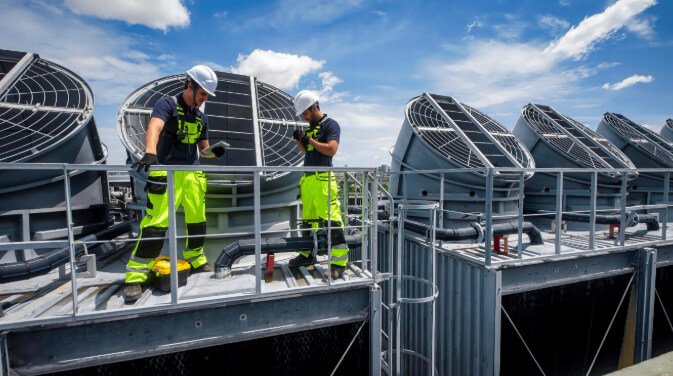

Cooling towers are essential to many industrial and commercial operations because they remove excess heat from circulating water. Manufacturing facilities, power plants, refrigeration systems, and large commercial buildings rely on effective cooling to protect equipment and maintain stable operating conditions. When a cooling system becomes inefficient, the impact may include higher energy costs, inconsistent process temperatures, and unexpected interruptions.
A cooling tower is not a single-function machine. It contains mechanical, structural, and water-management components that must work together to maintain performance. Understanding these components allows facility managers to make informed decisions about inspections, repairs, spare parts, and long-term maintenance.
A structured approach to equipment care can also help businesses identify developing problems before they become expensive failures. Rather than waiting for a breakdown, operators can monitor performance indicators, inspect vulnerable components, and establish a preventive maintenance schedule.
Understanding the Basic Cooling Process
A cooling tower removes heat from water by bringing the water into contact with air. Warm water enters the tower and spreads across internal heat-transfer surfaces. Air passes through the equipment, and a portion of the water evaporates, carrying heat away from the remaining water.
The cooled water collects in a basin before returning to the process or cooling circuit. The exact arrangement depends on the tower design, required cooling capacity, and operating environment.
Several factors influence performance, including water flow, airflow, ambient wet-bulb temperature, heat-transfer surface area, and the condition of internal components. A problem in one area can affect the entire system.
For example, a fan that cannot provide sufficient airflow may reduce heat rejection. Blocked water distribution nozzles may create uneven wetting, while scale deposits on fill media can restrict airflow and reduce effective heat-transfer performance.
Understanding these relationships helps maintenance teams diagnose problems systematically instead of replacing parts without identifying the cause.
Essential Components Every Operator Should Understand
Fans, Motors, and Drive Assemblies
Fans create the airflow required for heat transfer. Depending on the cooling tower design, air may be drawn through the equipment or pushed into it. Motors provide the power needed to operate the fan, while additional drive components may include gearboxes, shafts, couplings, belts, and pulleys.
These components experience mechanical loads during normal operation. Imbalance, misalignment, loose fasteners, bearing wear, or damaged fan blades can lead to vibration and reduced efficiency.
Operators should pay attention to unusual sounds, changes in vibration, overheating, and unexpected increases in electricity consumption. Inspections and servicing should follow the manufacturer’s recommendations.
When a component requires replacement, its specifications must match the intended application. Differences in motor power, rotational speed, fan geometry, or mounting arrangements can affect system performance.
Fill Media and Heat-Transfer Surfaces
Fill media increases the surface area available for contact between water and air. This helps the cooling tower transfer heat more effectively.
Different fill configurations serve different applications. Film fill spreads water across thin surfaces, while splash fill breaks water into smaller droplets. Selection depends on the tower design, water quality, and operating conditions.
Fill media may gradually collect scale, dirt, suspended solids, or biological deposits. Damaged or blocked material can interfere with airflow and water distribution, reducing the tower’s cooling ability.
Maintenance teams should inspect the fill for deposits, physical deterioration, and uneven water coverage. Cleaning may be appropriate in some situations, but heavily damaged material may require replacement. The chosen maintenance method should be compatible with the fill material and the manufacturer’s instructions.
Water Distribution Pipes and Nozzles
The water distribution system carries warm water across the tower’s heat-transfer surfaces. Depending on the design, it may contain pipes, spray nozzles, manifolds, distribution basins, and connecting fittings.
Uniform distribution is important because the available fill area must receive the intended water flow. Blocked nozzles or damaged piping can create uneven coverage and reduce effective heat transfer.
Regular inspections should check for leaks, obstructions, corrosion, damaged fittings, and changes in spray patterns. If the same blockage occurs repeatedly, the facility should investigate water quality and filtration rather than relying only on repeated cleaning.
Replacement nozzles and fittings must match the original dimensions, connection types, and operating requirements.
Drift Eliminators and Air Inlet Louvers
Drift eliminators reduce the amount of liquid water droplets carried out of the tower by exhaust air. They help control water loss and reduce the release of droplets containing treatment chemicals.
Damaged or incorrectly positioned eliminators may increase drift. Maintenance teams should inspect their condition, installation, and cleanliness according to the equipment’s service requirements.
Air inlet louvers guide incoming air and may also limit water splash-out. Debris, deposits, or physical damage can restrict airflow and affect performance.
Both components should remain correctly positioned and unobstructed. Suitable replacement parts should be selected to match the tower’s configuration.
Basin, Casing, and Structural Supports
The cold-water basin collects cooled water before it returns to the process. Sediment, debris, leaks, and deterioration can affect basin performance and water quality.
The casing and structural supports protect and hold the cooling tower assembly. Depending on the materials and environment, these parts may be exposed to corrosion, weathering, vibration, or chemical damage.
Inspection should include visible surfaces, fasteners, access platforms, support frames, and other structural elements. Any suspected structural damage should be assessed by qualified personnel before the equipment continues operating under potentially unsafe conditions.
How to Diagnose Common Cooling Tower Problems
A systematic inspection process helps maintenance teams distinguish between component failure and broader operating issues.
Reduced Cooling Capacity
When the tower fails to achieve its expected cold-water temperature, possible causes include insufficient airflow, fouled fill media, uneven water distribution, or an increased process heat load.
Ambient conditions also matter. The cooling tower’s achievable cold-water temperature depends partly on the surrounding air’s wet-bulb temperature, so performance should be compared against the correct design conditions.
Operators should record entering and leaving water temperatures, water flow, and relevant ambient measurements. This information provides a stronger basis for deciding which components need attention.
Excessive Noise or Vibration
Unusual mechanical noise can indicate loose fasteners, worn bearings, damaged blades, alignment problems, or drive-system issues.
The maintenance team should document when the symptoms occur and arrange an appropriate inspection. Equipment must be isolated according to site procedures before workers access hazardous moving parts.
Continuing to operate a visibly damaged or excessively vibrating assembly may increase the risk of further equipment damage.
Higher Water and Energy Consumption
Unexpected increases in water use may be associated with leakage, excessive drift, or unsuitable blowdown control. Increased electricity consumption may indicate mechanical inefficiency, restricted airflow, motor problems, or changing process requirements.
Historical operating records help determine whether the change is temporary or part of a longer-term trend. A complete inspection should assess the relevant equipment and operating conditions before a repair decision is made.
Using a Structured Maintenance Checklist
A maintenance checklist helps teams perform inspections consistently and retain useful records. The exact schedule should reflect the manufacturer’s recommendations, operating hours, water quality, environmental conditions, and the consequences of equipment failure.
A practical checklist can include:
- Mechanical condition: Check fans, motors, bearings, drives, fasteners, and visible signs of vibration or wear.
- Water distribution: Inspect nozzles, pipes, manifolds, and spray patterns for obstruction or leakage.
- Fill media: Look for scale, dirt, biological deposits, blockage, and physical damage.
- Drift eliminators: Confirm correct positioning and inspect for cracks, gaps, or obstructions.
- Cold-water basin: Check for sediment, debris, leakage, and deterioration.
- Structural condition: Examine supports, casing panels, access platforms, and visible corrosion.
- Water treatment: Review treatment records and monitor conditions relevant to scale, corrosion, and biological control.
- Operating performance: Record temperatures, flow rates, energy consumption, and relevant vibration measurements.
Inspection findings should be documented with dates, observations, corrective actions, and the identity of any replacement components. Consistent records help identify recurring problems and support better maintenance planning.
Selecting the Right Replacement Components
Choosing replacement components requires accurate identification of the equipment and its operating requirements. A part that looks similar to the original may differ in material, dimensions, performance, or mounting arrangements.
When using a cooling tower parts guide maintenance personnel should begin with the equipment model, serial number, original part reference, and available technical drawings. Photographs and measurements can help support identification, but they should not replace verification of critical specifications.
The selection process should account for the component’s function. Mechanical parts may require precise dimensional and load compatibility, while water distribution components must meet the required flow and connection specifications. Fill media and drift eliminators must suit the tower’s internal arrangement and operating environment.
For equipment-specific components, buyers should confirm compatibility with the manufacturer or a qualified supplier before ordering. They should also review material suitability, delivery lead times, warranty conditions, and the availability of technical support.
Keeping accurate part records can reduce ordering errors during future repairs. Recording part numbers and installation dates also helps establish a useful service history.
Water Quality, Hygiene, and Environmental Considerations
Water management is a major part of cooling tower maintenance. Evaporation increases the concentration of dissolved minerals in the remaining circulating water, which can contribute to scale formation. Corrosion and suspended solids may also damage components or obstruct water passages.
A suitable treatment program should be based on the makeup-water source, operating conditions, materials, and applicable regulations. Depending on the system, it may include filtration, chemical treatment, conductivity monitoring, and controlled blowdown.
Cooling towers can support the growth of microorganisms, including Legionella, if water-management practices are inadequate. Operators should maintain a documented water-management program and follow applicable public-health requirements. Cleaning, disinfection, monitoring, and corrective actions should be performed according to the facility’s risk assessment and relevant guidance.
Environmental performance also depends on drift control, responsible water use, and suitable noise management. These considerations should be included in maintenance planning rather than treated as separate issues.
Improving Long-Term Maintenance Efficiency
Preventive maintenance becomes more effective when it is based on actual equipment condition and operating history. Facilities can use inspection records to identify components that wear frequently, recurring water distribution problems, and changes in cooling performance.
Spare-parts inventory should reflect the importance of each component, expected failure patterns, procurement lead times, and the effect of downtime. Keeping essential items available may reduce repair delays, while excessive inventory can tie up capital unnecessarily.
Businesses should also investigate repeated failures. If a replacement part wears out much sooner than expected, the underlying issue may involve incorrect selection, poor installation, water chemistry, excessive vibration, or operation outside the intended design conditions.
Combining accurate records, compatible components, operator training, and planned inspections helps maintenance teams make decisions based on evidence rather than guesswork.
See also: How to Create a Competitive Business Strategy
Frequently Asked Questions
1. Which cooling tower components should be inspected most frequently?
Fans, motors, water distribution systems, fill media, drift eliminators, and the cold-water basin are common inspection priorities. The exact frequency depends on operating conditions, water quality, equipment design, and manufacturer recommendations.
2. What information is needed to order the correct cooling tower parts?
The equipment model, serial number, original part reference, dimensions, and relevant technical specifications are useful starting points. Critical compatibility details should be verified before purchasing replacement components.
3. How can regular maintenance reduce cooling tower operating costs?
Regular inspections can identify developing problems before they cause major failures. Suitable water treatment, clean heat-transfer surfaces, correct airflow, and compatible replacement components can also support efficiency and reduce avoidable repair expenses.
Conclusion
Reliable cooling tower operation depends on the condition of its mechanical, structural, and water-management components. Understanding how fans, fill media, distribution systems, drift eliminators, and basins function together helps operators recognise problems and plan effective maintenance.
A consistent inspection schedule, accurate operating records, appropriate water treatment, and careful replacement-part selection can reduce unexpected downtime and improve long-term reliability. By approaching maintenance systematically, businesses can protect equipment performance, manage operating costs, and support stable industrial operations.
